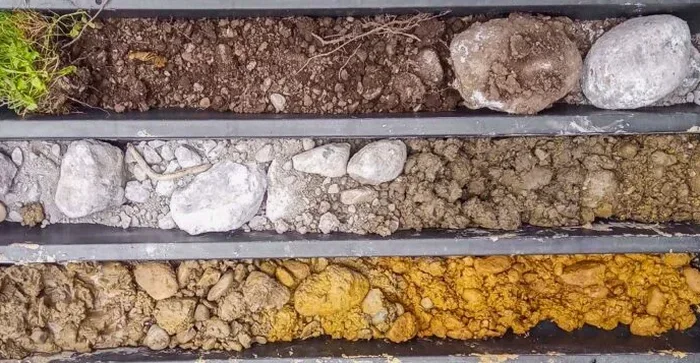
The heavy, moisture-retentive glacial tills across Warrington’s Mersey basin create a distinct challenge for any ground investigation. Shallow horizons here can change from stiff boulder clay to saturated sands within a few metres, especially near the old river terraces south of the town centre.
In our experience, a well-positioned exploratory test pit cuts through that uncertainty faster than any indirect method. You get a clear, exposed soil profile, direct access for undisturbed sampling, and an immediate read on groundwater ingress before it becomes a construction problem. For sites near the Manchester Ship Canal or the post-industrial corridors around Bank Quay, we often combine pit observations with a grain-size analysis to verify drainage potential, or specify Atterberg limits testing when the clay fraction looks borderline. The goal is always the same: a defensible ground model that keeps the project moving and the regulator satisfied.
A single well-logged test pit often reveals more about Warrington's erratic drift geology than half a dozen boreholes.
Our approach and scope
Warrington sits on a complex drift geology dominated by Devensian till overlying Sherwood Sandstone. The till here is notoriously variable, containing lenses of sand and gravel that can collapse during excavation if not properly supported. A machine-dug trial pit gives us the full picture: we log the sequence, measure in-situ density with a nuclear gauge where needed, and take block samples from cohesive layers for strength testing back at the lab.
Working within the narrow access of a typical Birchwood commercial plot or a tight residential extension in Great Sankey demands careful traffic management and CAT scanning prior to breaking ground. Our pit logs follow BS 5930:2015+A1:2020 descriptive protocols, including moisture condition, consistency, and discontinuity spacing. When the investigation needs to go deeper than 4.5 metres, we often recommend a
CPT test to extend the profile without the cost of hydraulic shoring, giving a continuous strength and pore pressure record through the sandier units.
Site-specific factors
Eurocode 7 and BS 5930 both require adequate investigation points per structure footprint. In Warrington, skipping the exploratory test pit phase on a shallow foundation project can lead to an expensive redesign when buried services, made ground, or perched water are encountered mid-construction.
The biggest liability we see is in the former industrial zones around Latchford and Arpley, where historical fill containing brick, ash, and occasional chemical residues can render the bearing stratum unsuitable. A trial pit exposes these hazards directly, allowing the design team to specify a dig-and-replace strategy or switch to a footings solution with deeper embedment. The alternative is a costly discovery later, when the excavator bucket hits something unexpected and the project enters a delay claim cycle.
Common questions
How long does an exploratory test pit investigation take in Warrington?
A single pit excavation, logging, and sampling typically takes one day on site. The laboratory testing and reporting phase adds about 5 to 7 working days, depending on the suite of tests required.
What is the typical cost range for a test pit in the Warrington area?
For a standard machine-dug trial pit with full logging, sampling, and a factual report, costs in Warrington generally fall between £390 and £720, depending on depth, access constraints, and the number of samples taken.
Do I need a permit to open a trial pit on my land in Warrington?
It depends on the location. On private land, no council permit is usually needed, but we always handle the CAT scan and any required street works permits if the pit encroaches on a public footpath or highway.
Can you investigate deeper than 4.5 metres without a borehole?
Beyond 4.5 metres, hydraulic shoring becomes mandatory, which often makes a borehole or a CPT sounding more cost-effective. We can combine a shallow test pit with deeper CPT test probing to cover the full depth profile.